5th century St Eilian’s & 6th century St Seiriol
Two centuries-old Anglesey churches with failing towers have been given emergency funding to stop them crumbling away. One is a monastery church at risk of closing, the other is medieval church famed for its sinister “cursing well” and mysterious subterranean boneyard.
It’s hoped the investments will stimulate interest in a new pilgrimage trail and encourage more people to visit the island for its serenity, myths and heritage. The Anglesey Saints Way (Llwybr Cybi a Seiriol) was launched in 2024 amid fresh interest in sacred places sparked by the BBC’s Pilgrimage series. Stretching 57 miles and taking five days, the east-west trail connects the 6th-century monastic sites of St Seiriol, Penmon, and St Cybi, Holyhead. However there is “huge concern” about the future of St Seiriol’s famous tower, the centrepiece of a monastery established in the 6th century. Regarded as a landmark building in Welsh and Christian history, water ingress is damaging its tower and nave beneath. Urgent repairs are needed before winter, without which the Grade 1-listed church may have to close to visitors.
Rev Huw Butler, ministry area leader at Bro Seiriol, said: “Refurbishment work is critical to ensure the building is watertight and prevented from further deterioration. “The Priory is open daily receiving an estimated 17,000 visitors and pilgrims each year who benefit from the ancient ambience and spirituality of this amazing holy place. “It would be an absolute tragedy if the water ingress became so severe that we would be forced to close the church to visitors.”
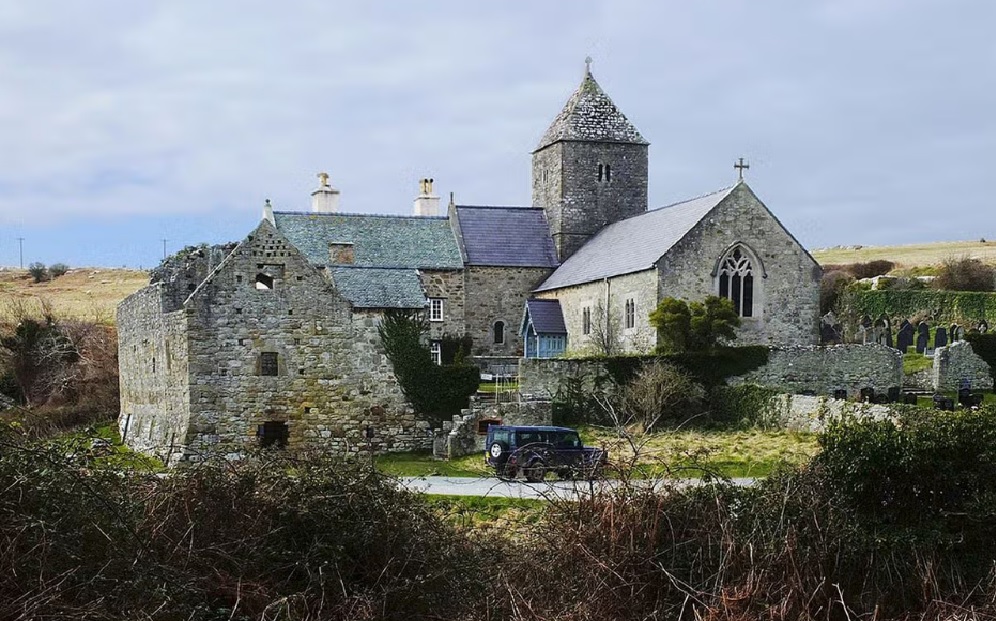 St Seiriol’s Church and its derelict priory in Penmon, southeast Anglesey(Image: Gary Rogers/Wiki)
St Seiriol’s has hosted continuous worship for more than 1,500 years. It was once part of a 6th century monastery which survived King Edward’s invasion of Wales when many other places of worship did not. It was eventually dissolved in 1538. Only the church has survived, standing next to the ruins of its 12th century Augustinian priory. It's thought walls at a nearby well could be part of the oldest remaining Christian building in Wales. In the church nave are two Celtic crosses and an ancient cross base now used as a font. There’s also a replica of the Limoges Enamel - a decorative 13th century metalwork that was only discovered during a 19th century renovation. Recent Saints Way pilgrims have included a group of Russian Orthodox Christians.
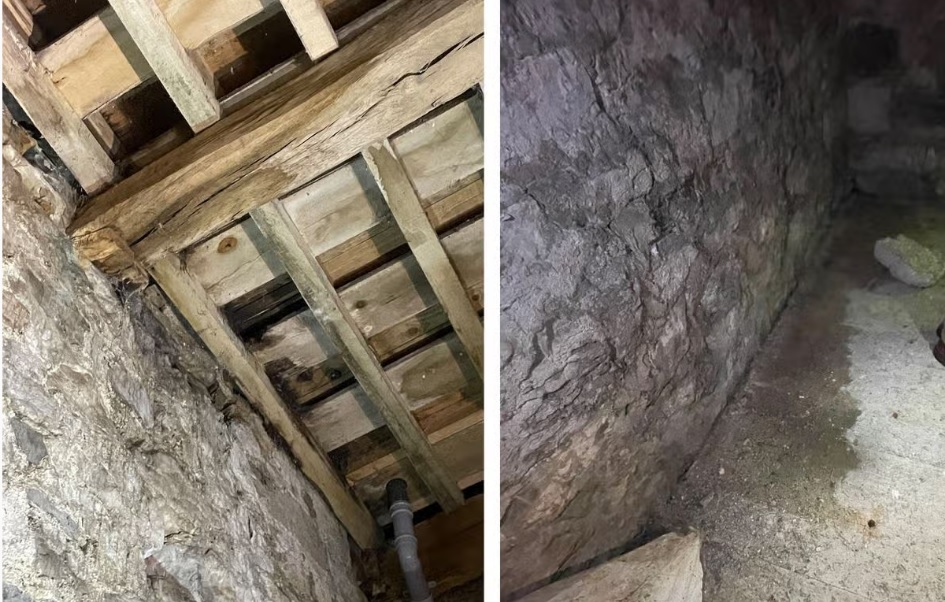 Rainwater damage in the tower is causing significant concern(Image: Huw Butler)
Rev Butler said: “The interior nave area, which houses three significant 10th century Celtic stones and detailed Norman stonework, is very damp due to water ingress. Renovation work is essential to ensure the building is watertight and protected against further deterioration.”
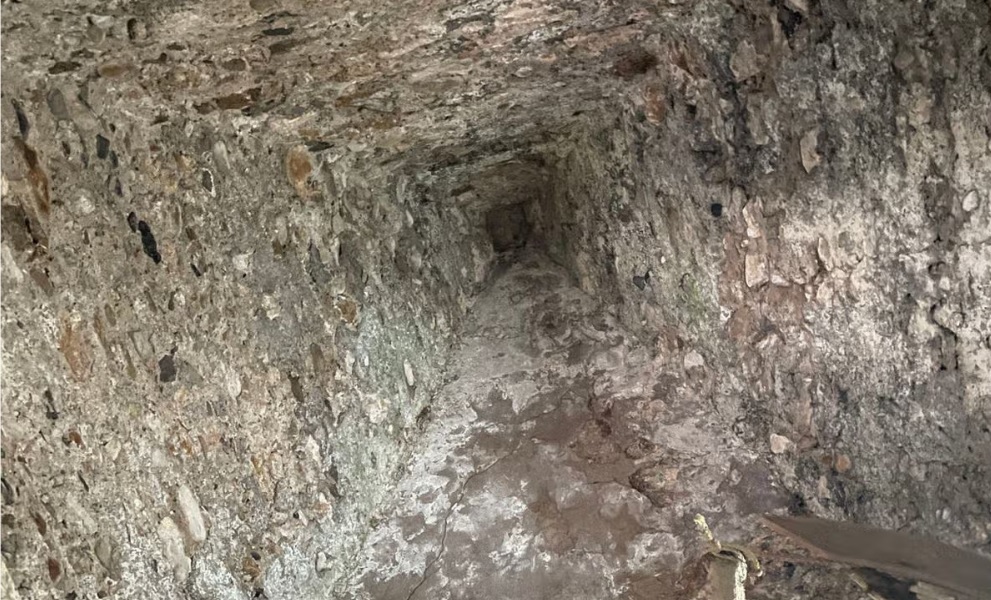 inside St Seiriol’s distinctive tower(Image: Huw Butler)
Funding for this has now been provided by the National Churches Trust (NCT), courtesy of a £32,999 grant. A further £7,000 was donated by the Wolfson Foundation and the Headley Trust. Together, the grants will help pay for pointing and abutments on the church tower to ensure it is waterproof and windtight. The NCT grant is part of a £300,000-plus allocation to 10 deteriorating churches and chapels across Wales. These include another ancient Anglesey church whose tower is also in a bad way.
Medieval church set to reveal macabre secrets
In northeast Anglesey, at Llaneilian, is another pilgrimage church with a striking square tower. Having surviving coastal gales and lashing rain for 900 years, urgent repairs are now needed to St Eilian’s 12th century tower. Already, cracks have appeared in stonework around several windows. These must be fixed and the entire tower must be lime-washed to stop water getting in. Drainage systems below also need upgrading as rainwater is pooling around the church and inside its chapel.
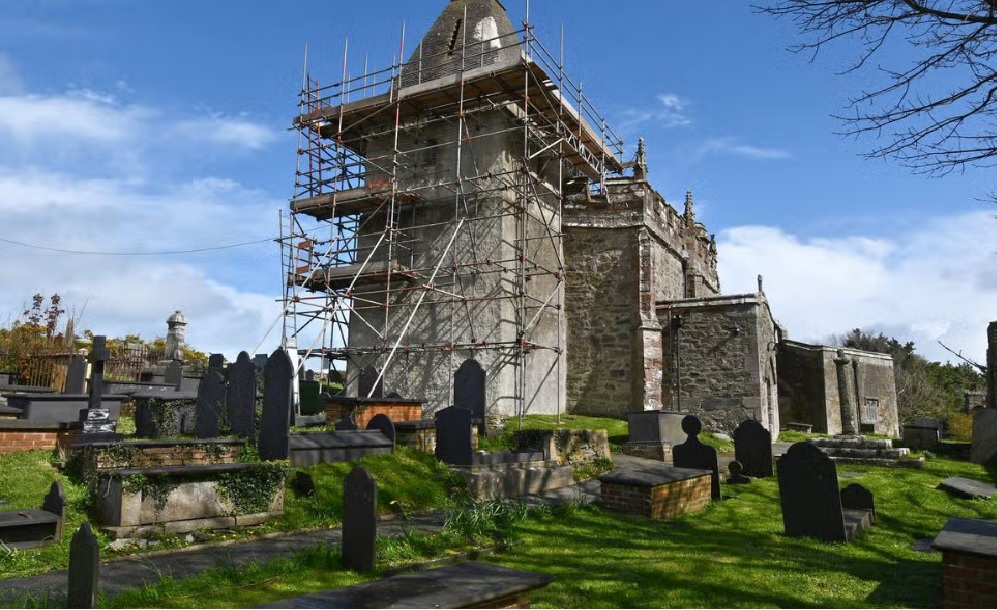 Scaffolding went up last month at St Eilian’s church tower in Llaneilian, northeast Anglesey(Image: Bethan Jones)
Restoration work began last month. It’s a costly business, requiring tens of thousands of pounds. Church treasurer Lesley Rider said: “For centuries this church and its graveyard have played an important part in the lives of this rural community, and we strive to keep it going. "Despite this, the regular congregation is small and fundraising for repairs has been a challenge. There are several areas that need repair or maintenance work, including the 14th century chapel, our many windows and the current areas of water damage to walls.
"We also have some mysteries! One is our ossuary which is next to the nave and porch - what will we find when we open it?”
Historically, an ossuary, or charnel house, was used in cramped churchyards to store skeletal remains uncovered when digging new graves. At St Eilian’s, a smaller, built-in wall ossuary was discovered during masonry work in the 19th century. It was packed tightly with human bones. However the church’s main ossuary is underground. The chamber was sealed off centuries ago and no one has seen inside since. To reduce flooding at the site, new drainage channels are being installed. As access to one of these is blocked by the ossuary, it must be opened for the first time in generations. When it is, an archaeological excavation is planned.
Unruly dogs and cursed dummies
Grade I-listed St Eilian’s dates back to the 5th century. It has many unique features, including an unusual 12th century stone pyramidal spire and 15th century rood screen. This ornate carved wooden partition has a painting of a skeleton with a scythe and the inscription ‘Colyn Angau yw Pechod’ or ‘Sin is the Sting of Death’.
Also present is a pair of large wooden tongs from the 18th century, used to evict unruly dogs from the church.
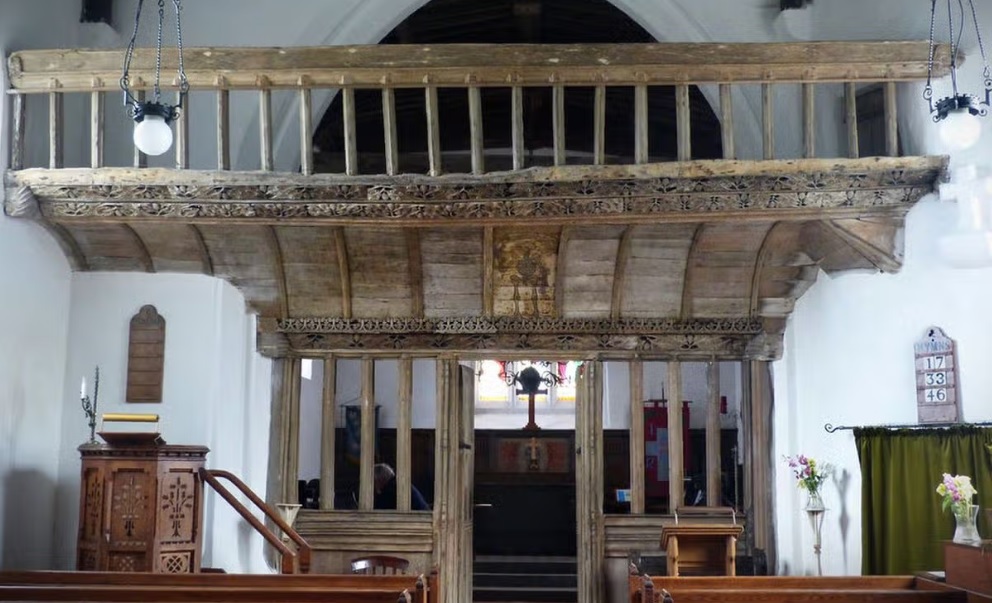 St Eilian’s grew wealthy on the proceeds of pilgrims and its healing well(Image: Gail Hampshire/Wiki)
A wooden chest with iron bands, dated 1667 and known locally as Cyff Eilian, was used to collect donations from parishioners and pilgrims. Donations were also required from anyone visiting Ffynnon Eilian, a healing well enclosed in a small chapel on the coast nearby. It was a lucrative source of income.
Later the well developed a reputation as a cursing well. Visitors would pay a well-keeper to create a dummy of the person to be cursed – these were then pierced and “drowned” in the well. Slates were also marked with the victim’s name. A cursed dummy and a marked slate were found close to the well in 1925 and are now in Bangor’s Storiel Museum. Alternatively, frogs were skewered and floated in the well. People cursed this way would suffer for as long as the frog lived. Ffynnon Eilian is still known locally as the “Witching Well”.
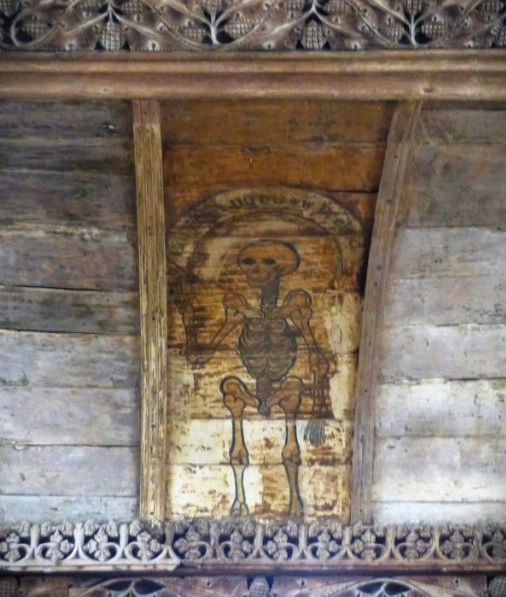 The church's ornate rood screen has a painting of a skeleton holding a scythe. It bears the inscription ‘Colyn Angau yw Pechod’ or ‘Sin is the Sting of Death’(Image: Gail Hampshire/Wiki)
Today, the church receives at least 5,000 visitors every year from the UK and abroad, some diverting from the Anglesey Coastal Path. St Eilian’s reckons this number is just the “tip of the iceberg” as most people don’t sign the church’s visitor book. For its repairs, St Eilian’s has now received a £31,796 NCT grant and a further a £7,000 Wolfson Foundation and the Headley Trust. Lesley added: “This grant means that we can now look forward for a few years of not having to worry about the fabric of this grade I-listed medieval church.”
TOP
Home Page
Welcome Page
doobydoo@pastechoes.co.uk ©