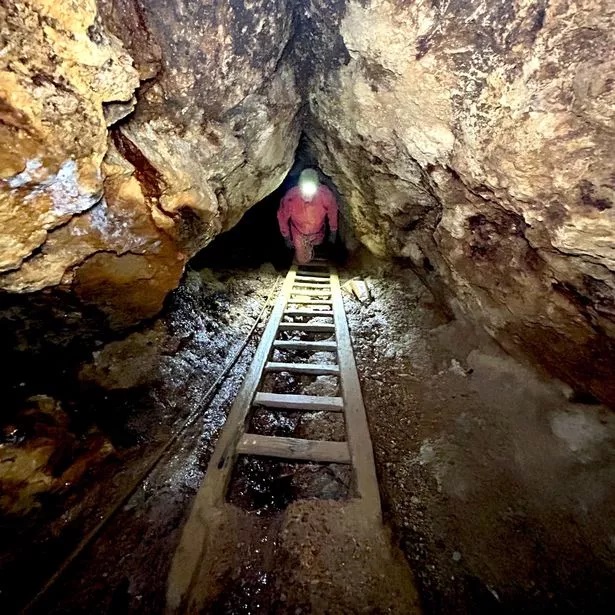
It’s a place renowned for its stark beauty and otherworldly landscapes.Yet beneath the alien terrain of Anglesey’s Parys Mountain (Mynydd Parys) lies another world that’s every bit as strange and colourful.Chambers, tunnels and adits hewn by miners over thousands of years have left a legacy that a recent visitor described as “eerie but peaceful”. Each year 40,000 visitors arrive at the mountain to marvel at its strangeness but few have ever glimpsed behind the locked doors of what was once the world’s largest copper mine.
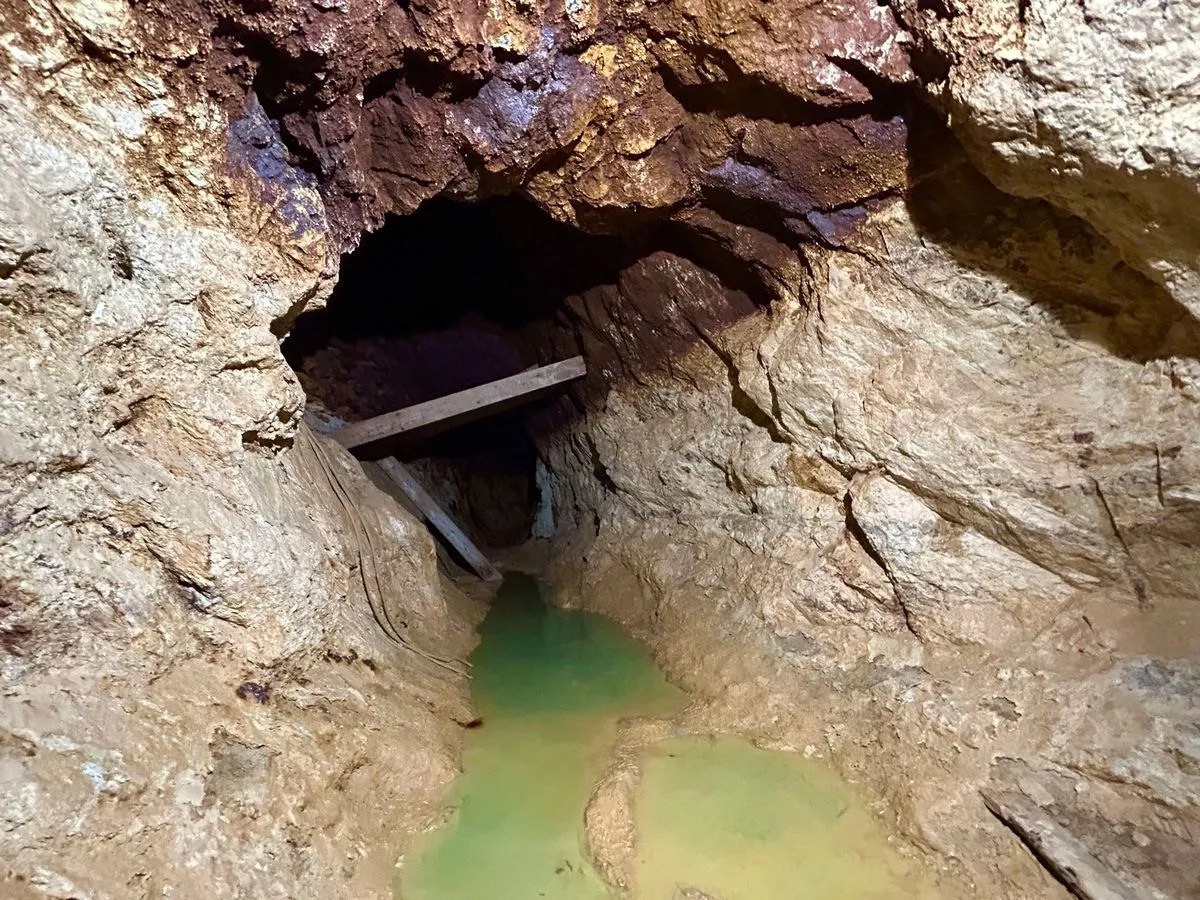
Inside the maze of passageways are relics left behind when mining stopped in the early 20th century. Tall wooden ladders link the various levels, while wooden wheelbarrows lie half buried in debris. In the darkness are signs of everyday life, from long-abandoned miners’ clogs to empty Wills Woodbine cigarette packets. Rock cannons, a distinctly Welsh form of fireworks, have been identified by members of Parys Underground Group (PUG), which has spent years uncovering the history and workings of the Parys and Mona copper mines.
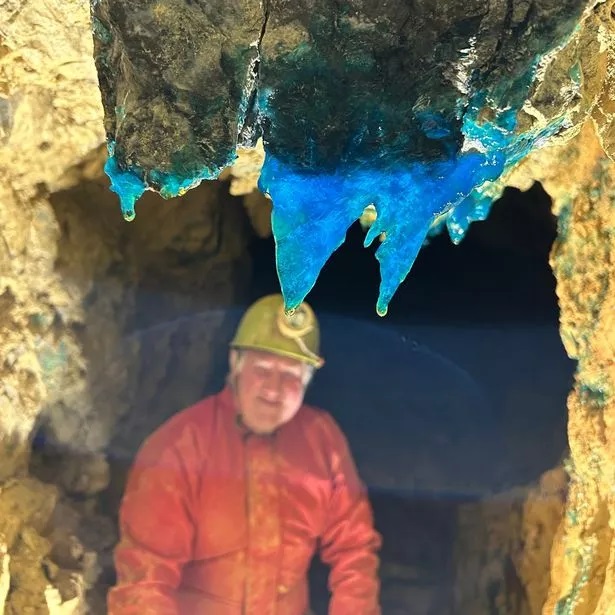
In the 1970 the discovery of a hammer stone, or “maul”, confirmed prehistoric mining had been take place here stretching back 4,000 years to the Bronze Age.For 10 years it had been used as a doorstep, its significance unrecognised.Since then, at least 136 mauls have been found together with prehistoric charcoal fragments. Everywhere in the mines there are stalagmites and stalactites, regarded as amongst the finest in Britain. As befits the site’s psychedelic appeal, these come in a range of colours from azure blues to sunburst yellows.
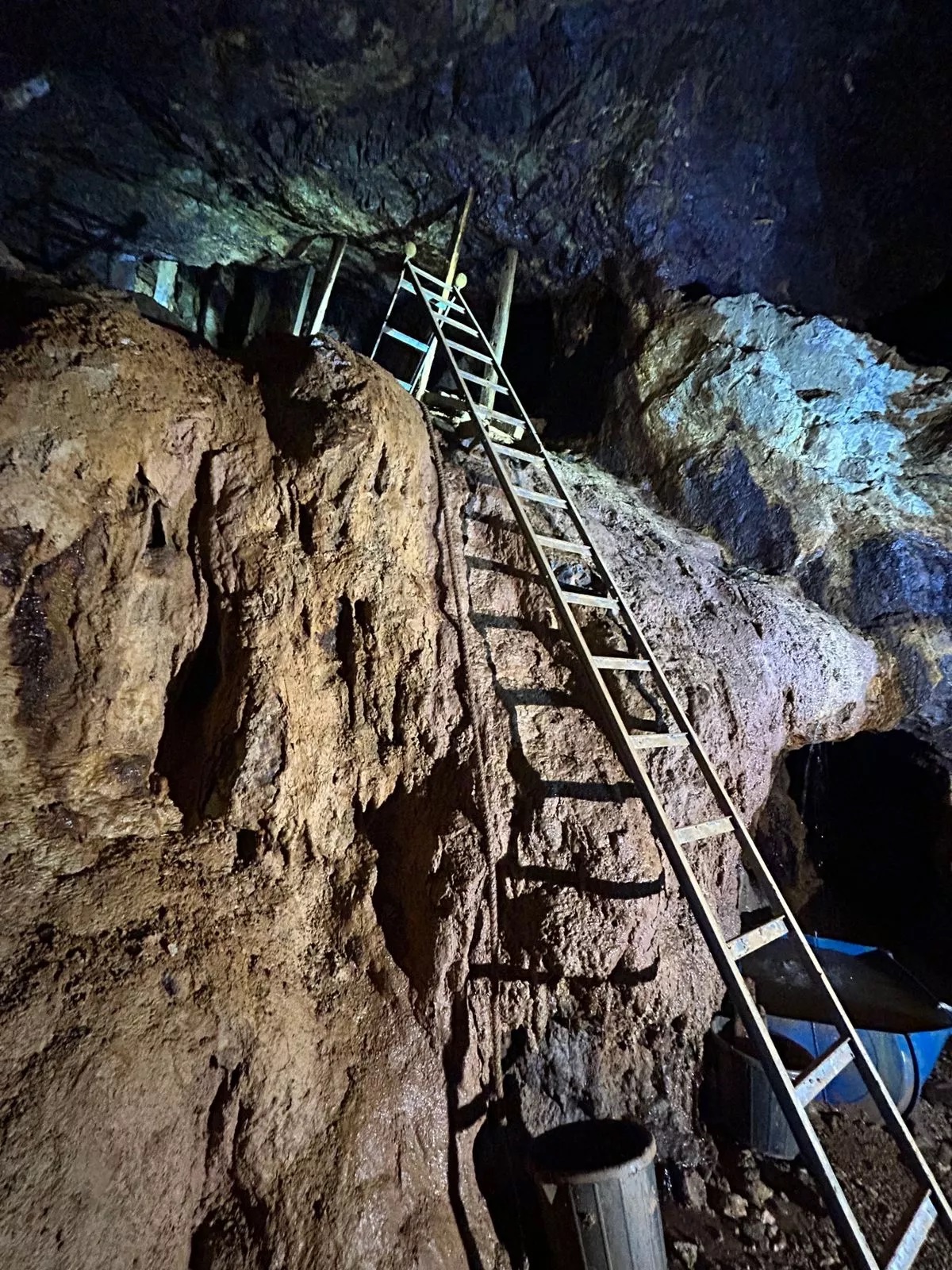
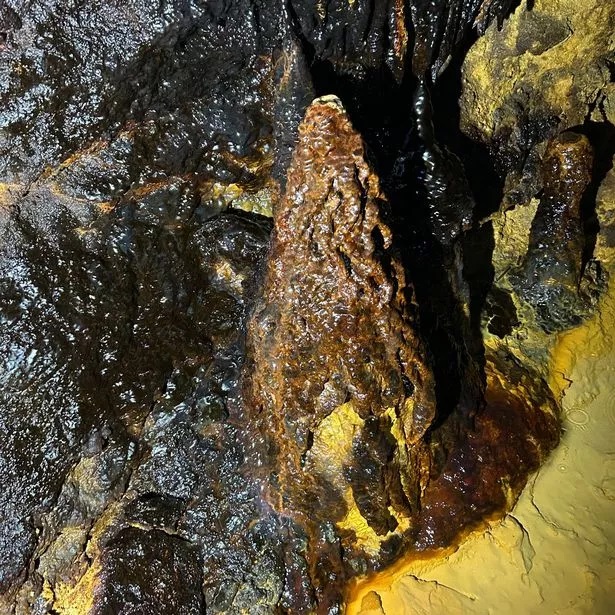
Stranger still are the slime tentacles dangling from passageways. These are “snotties” – bacterial formations found in the underground workings.As elsewhere on the mountain, much of the site’s biology is unique, with algae growing in surface precipitation ponds helping to create a vibrant mix of reds, oranges, yellows, and greens.“Because of the acidic environment, wooden objects tend to survive much longer than metallic ones,” said Lucy Dusgate, who recently joined a PUG tour to photograph the mine. “Some of the wooden items down there date to the 1800s.“When I went down there, I expected it to be cold. In fact I was surprised to find it pleasantly warm - the temperature is fairly constant all year round. There are lots of blue crystals and the water is green or brown depending on which tunnel it’s flowing through.
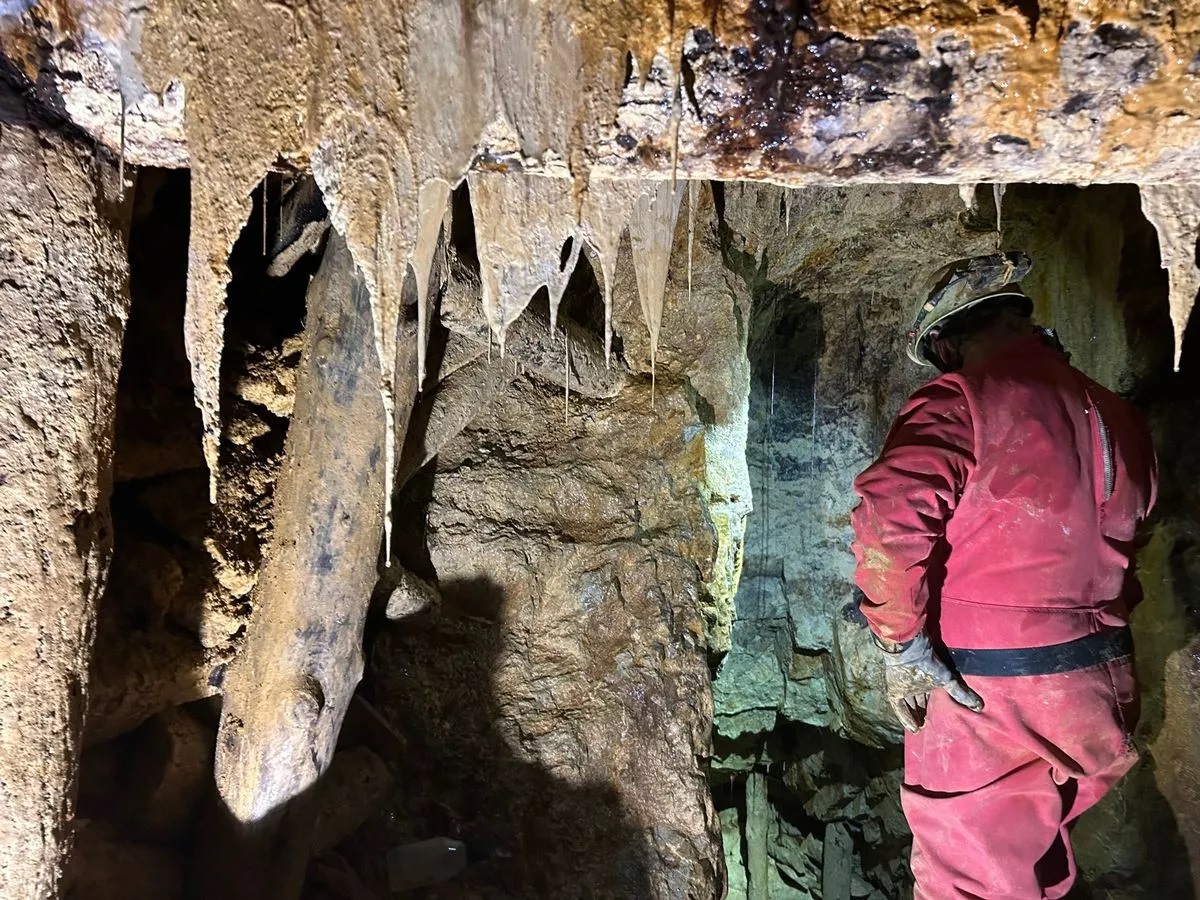
“The passageways are sloped but I could walk upright, perhaps showing how much shorter the male miners were when the tunnels were dug. The formations are absolutely stunning, amongst the best in the UK.“The place had an eerie feel but it was peaceful too - very different to how it must have been in its working heyday when the mine was a hive of activity.”
Given the dangers involved, mass exploration is unlikely to happen here soon. For insurance reasons, all underground access was closed in 1980 when more than 100 shafts and adits were sealed off with concrete caps. But Amlwch Industrial Heritage Trust (AIHT), which manages access to the mountain,wants more people to learn about the wonders underground. It’s encouraging anyone who wants to explore the mines to contact PUG.Annual membership is just £32 and includes insurance from British Caving. Only adults are permitted, and participants must be fit. You can contact PUG here.https://parysmountain.co.uk
For those unable to witness the mines’ subterranean majesty first hand, AIHT is hoping to recover artefacts for an “immersive” experience at a planned visitor centre next to the site’s free car park. Due to open in 2027, this will house the Copper Kingdom Museum after its relocation from Amlwch Port.
.
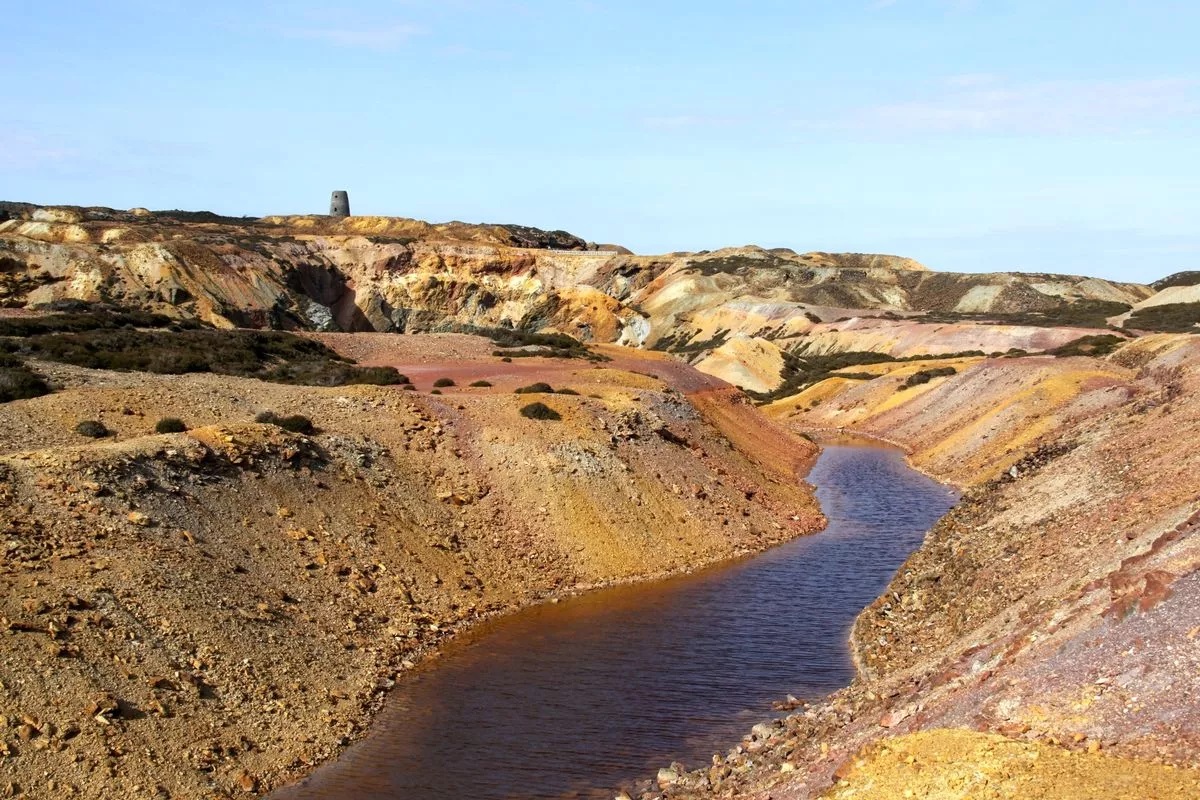

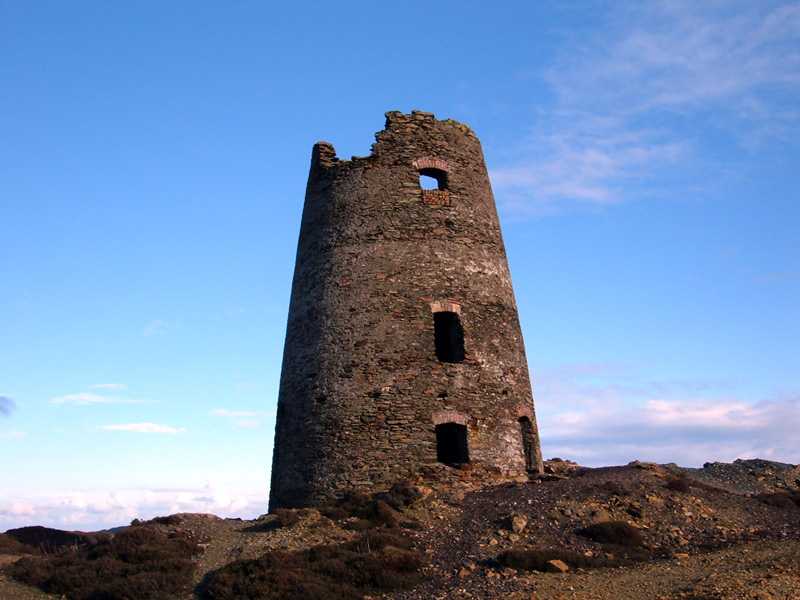
Parys Mountain is home to two Scheduled Monuments, including Wales’ only remaining five-sail windmill.
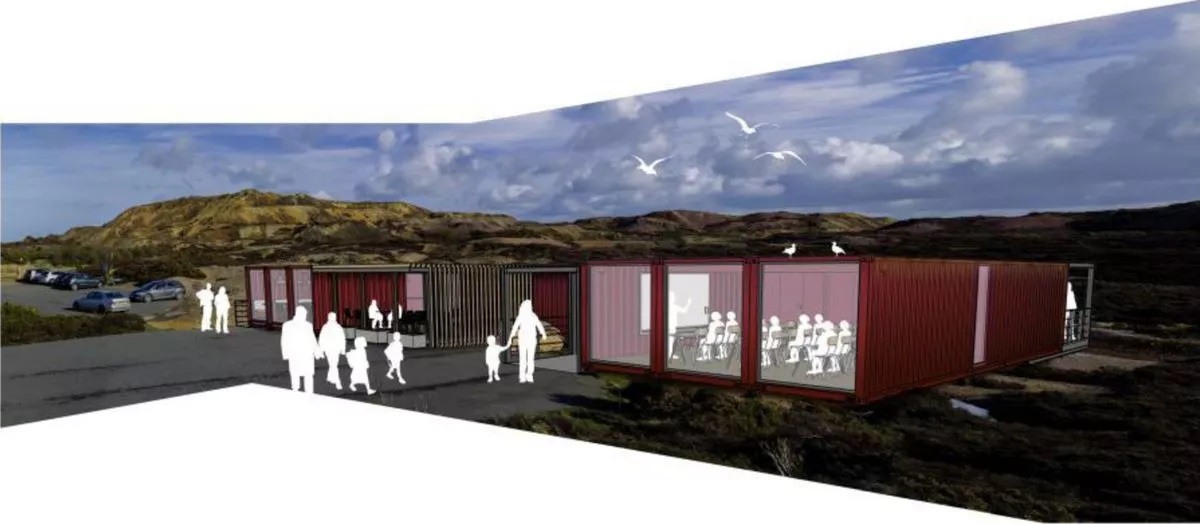
Developed in consultation with heritage body Cadw, the designs show a single-story structure made from inter-connected shipping containers. This will give the centre an industrial look that reflects it mining past. Backers include site owner the Marquess of Anglesey and TV presenter Sian Lloyd, whose great-great grandfather worked at the mine.Plaid leader Rhun ap Iorwerth and Anglesey MP Llinos Medi are also supporting a venture intended to shine a light on a beautiful and distinct landmark that was “pivotal to global economics”.
.
Towards the end of the 18th century, Parys Mountain briefly led world copper production with annual output of copper ore reaching 44,000 tonnes. It even produced its own copper coinage, the Parys Penny, in response to national shortages. From its two mines, excavated ore was carted down to the harbour at Porth Amlwch and shipped to Swansea or Ravenshead in Lancashire for smelting. A copper processing works was also established in Greenfield Valley,Flintshire. Life in the mines was tough: at one time 1,000 men toiled below in an environment blackened with smoke and fumes after blasting. Common injuries included being blinded by exploding gunpowder charges.
.
Just as hardy were the “copper ladies” - the groups of women wearing “Jim Crow” hats and protective metal gauntlets on their hands. They worked above ground smashing ore with hammers, some of them left widowed by mining accidents. Even today, there is thought to be a reserve of about 6.5 million tonnes of copper ore and other metals beneath the old mine workings including silver and gold. Anglesey Mining PLC plans to restart extraction for the first time since 1904. “The company and the Marquis of Anglesey have been excellent landlords, recognising the site’s heritage value,” said Lucy. “They are very supportive of our attempts to retain and preserve the mines’ history.“We’ve engaged with the public at events such as the Amlwch Viking Festival and Môn Walkers, and we’ve been working with local school children to create multi-coloured ideas for the future exhibition space.”
.
AIHT has developed an industrial heritage trail on the mountain and there are several self -guided trails in the area. Its multi-coloured Martian landscape is already a popular destination for heritage, geology and biodiversity tourists. Visiting is entirely free.The surreal terrain also attracts filmmakers - it served as the backdrop for scenes in Mortal Kombat Annihilation and recently featured as an “alien planet” on Netflix’s Black Mirror series.
©Andrew Forgrave Countryside and tourism editor
