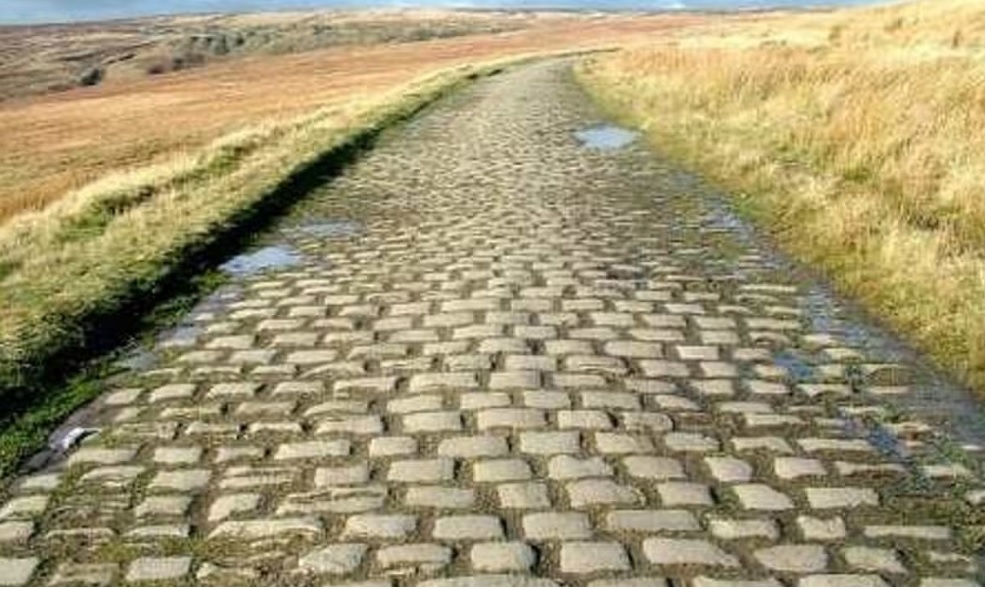
How a Lancashire famine caused by the American Civil War helped to build new parks, sewers and roads One highway even retains the name "Cotton Famine Road"
Lancashire's famed cotton industry led the Industrial Revolution but long before its demise in the early twentieth century it faced extinction during the so-called Cotton Famine. The boom years of the 1850s had been a period of unprecedented growth for the cotton industry in Lancashire with the populations of many mill towns doubling in a short space of time. However, events on the other side of the Atlantic led to a critical shortfall in the supply of raw materials, and a devastating period of poverty for those employed in the industry. In 1861 the American Civil War resulted in a blockade of cotton exports from the south; initially a voluntary boycott by Southern planters who believed a run on the cotton would quickly debilitate the British economy and force them to intervene on the South's behalf. However, not long after, the Union blockade further reduced the supply of raw cotton to Lancashire. It was initially believed that British warehoused stocks of cotton would be adequate to see out the anticipated brief conflict. As all the Union advances early on were driven back it became clear that the war would not be over quickly.
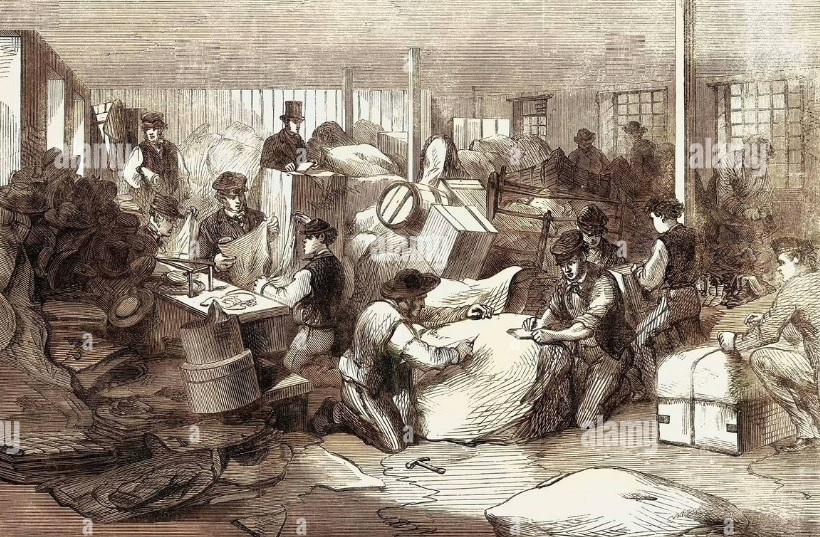
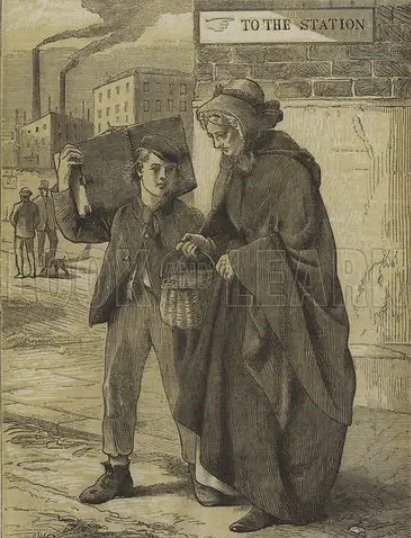 By the beginning of 1862, mills were being closed and workers laid off; one-third of the families in one Lancashire cotton town were in receipt of relief. Mill owners were also in difficulty as many of the smaller family-owned mills were mortgaged and if they stopped running the owners would fall behind with payments. Shopkeepers had no sales and could not afford the rents, workers defaulted on their rents and the landlord who stood the loss was often the mill owner. Some workers left Lancashire to work in the Yorkshire woollen and worsted industries. The towns of Stockport, Denton and Hyde diversified into hat making. Tameside was the worst affected district and suffered a net loss of population between 1861 and 1871. In 1864 there were 2,000 empty houses in Stockport and 686 in Glossop, along with 65 empty shops and fifteen empty beer houses. The exodus was caused primarily by evictions.
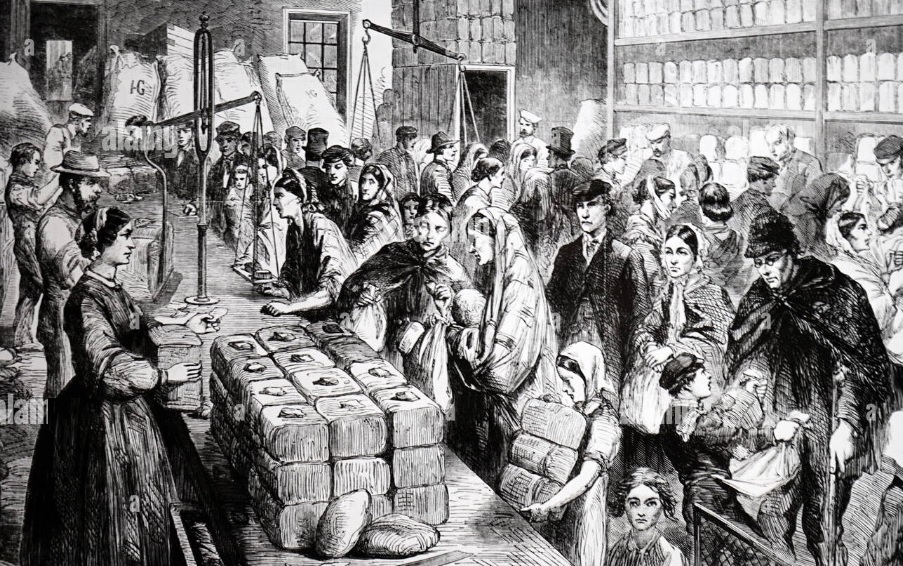
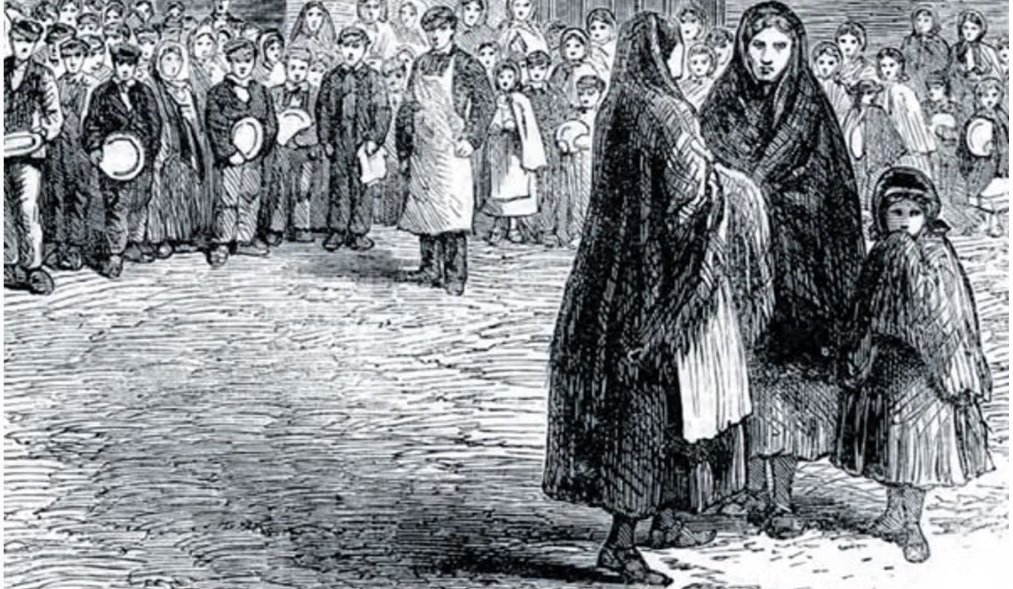 People queuing for food during the cotton famine(Image:The Illustrated London News)
The spring saw a wave of emigration stimulated by special agencies. The steamship companies cut their rates (steerage to New York cost £3 15s 6d), the Australian and New Zealand governments offered free passage, and 1,000 people had emigrated by August 1864.
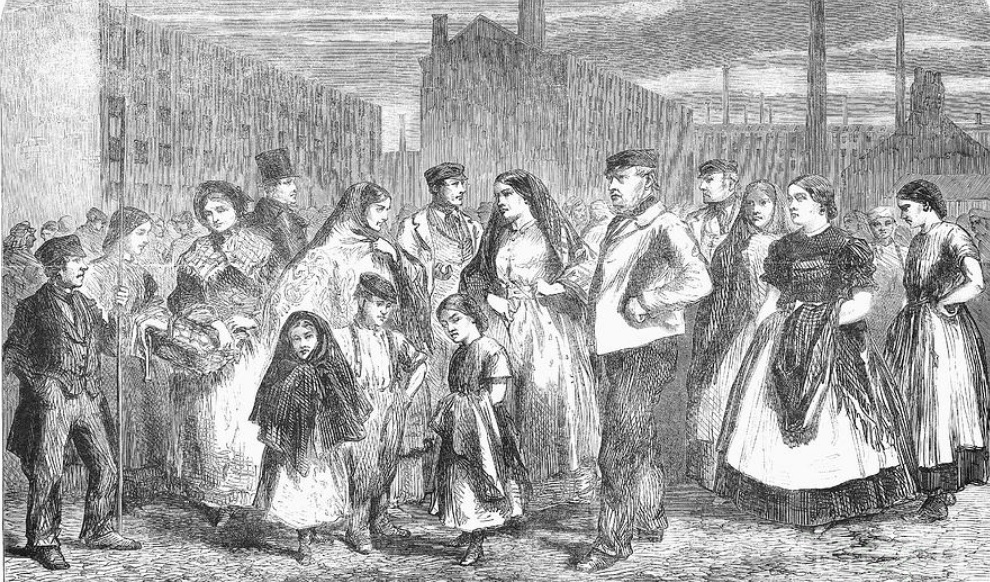
With 25,000 men out of work the Public Works Manufacturing Districts Act 1864 was passed to allow local councils to hire distressed workers for infrastructure projects such as building parks, sewers and paving roads including the famous Cotton Famine Road in Rochdale. One such municipal project was the landscaping of Moor Park in Preston which aimed to provide employment for those who had lost their jobs due to the cotton famine. The park is widely regarded as the first of its kind.
The Lancashire area has a legacy of municipal parks that were created in this period but more important were the main sewers that were commissioned to replace the collapsing medieval drains and to bring sanitation to the hundreds of mill workers' cottages that supported the mills. Canals were dug, rivers straightened and new roads constructed such as the cobbled road on Rooley Moor above Norden known as the "Cotton Famine Road". The public works commissioned in this period left a major impression on the infrastructure of the towns of Lancashire and the surrounding cotton areas.
© LANCS LIVE
