Talysarn
The origninal village of Talysarn in Gwynedd was once home to 2,000 people before being abandoned in 1927, and has since been completely reclaimed by nature
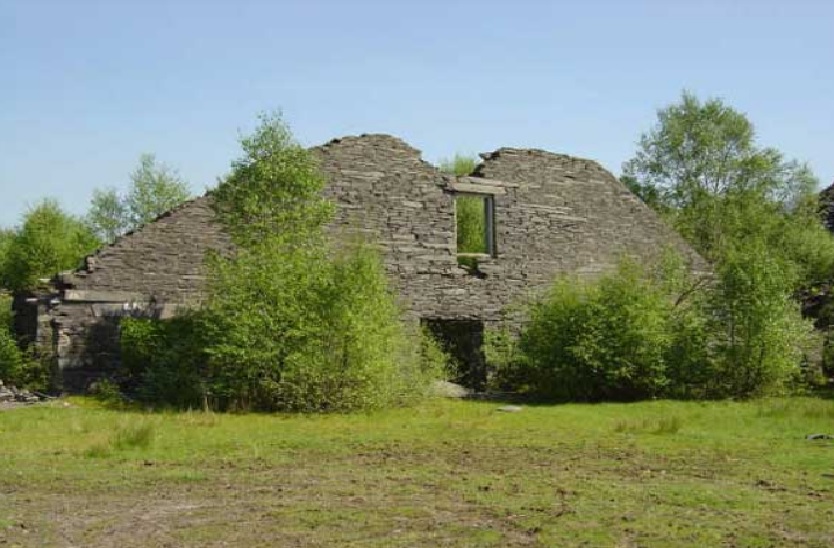
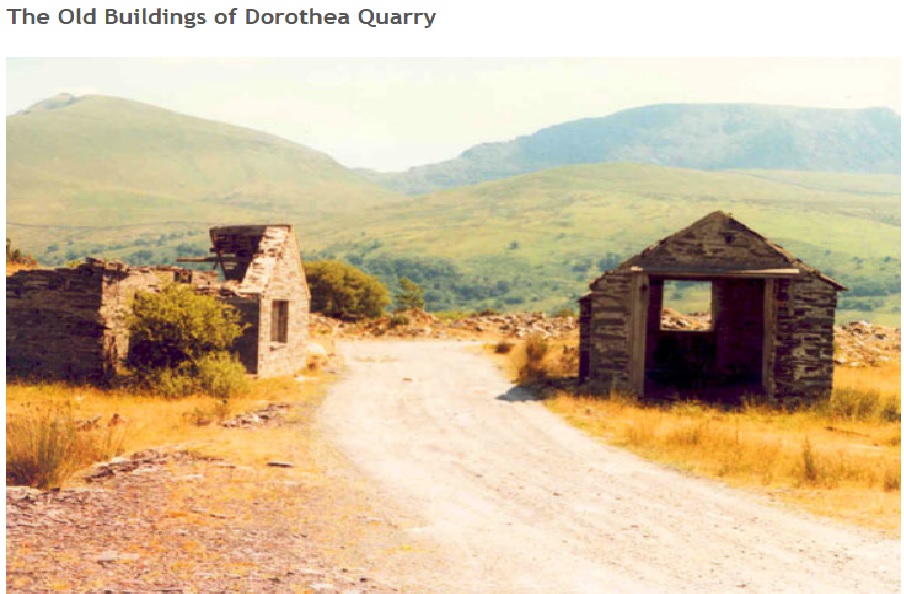
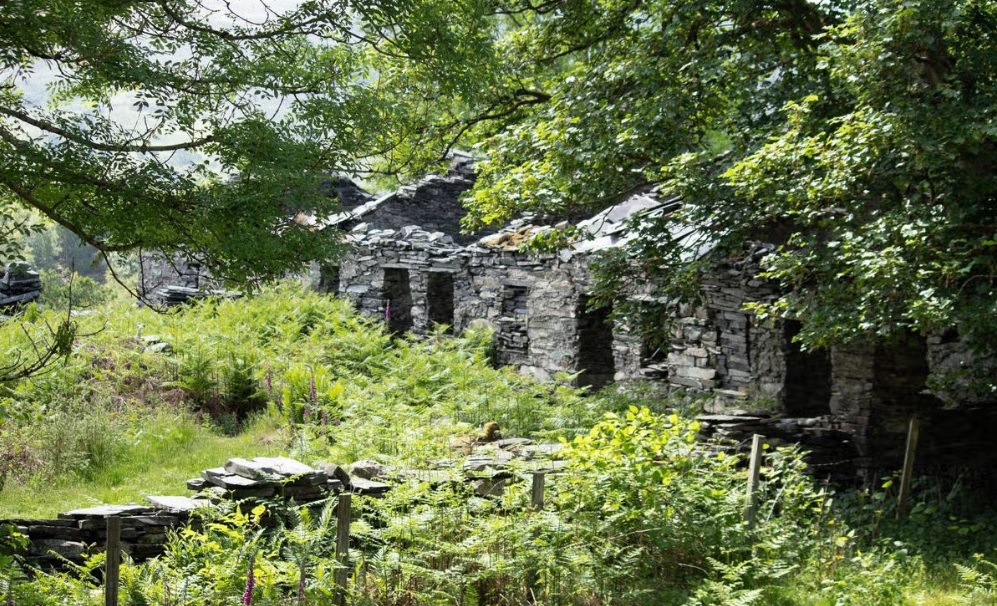 Abandoned ruined building near Dorothea quarry, Talysarn
An entire village was abandoned after its 2,000 residents were forced to leave. All that survives of the formerly thriving community are buildings completely overtaken by plant life and nearly wholly cloaked in moss and greenery. The abandoned hamlet of Talysarn, in Gwynedd's Nantlle Valley in North Wales,is a former village engulfed by the natural world as time progressed. It once accommodated workers and industrial infrastructure supporting the neighbouring slate works, Dorothea Quarry, which is not far from the exisitng village of Talysarn.Throughout the 19th century, these quarries furnished jobs for thousands of people across Wales, but as the excavations grew, the community required expansion as well. Therefore, when 1927 came round, officials chose to move thousands of residents to an entirely new settlement.
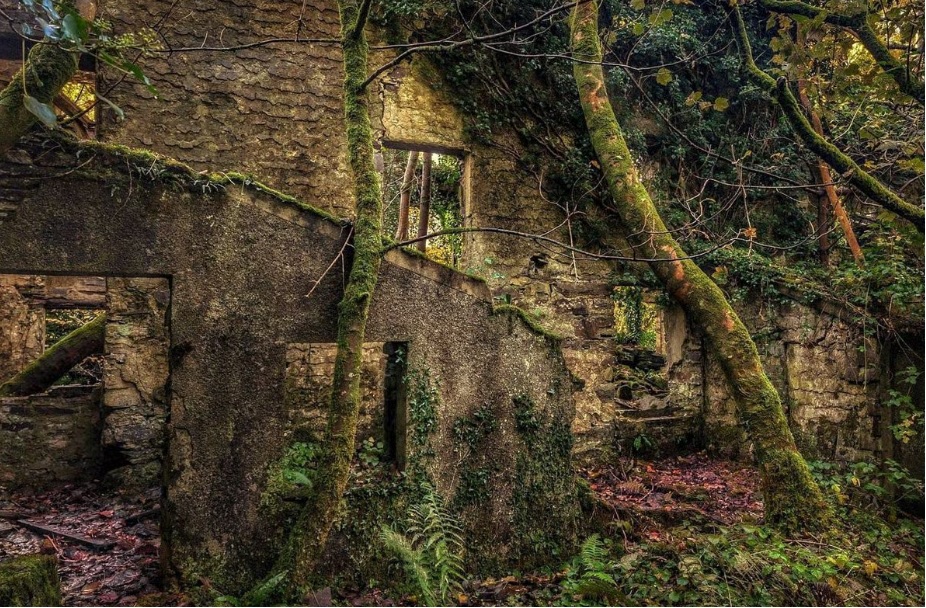 Ruins of Plas Talysarn, a Victorian villa
By the 1840s, yields at Dorothea had risen to a remarkable 5,000 tonnes per year, though that amount subsequently climbed substantially higher. By the 1870s, output surpassed 17,000 tonnes, constituting more than three times the quantity achieved three decades prior. While the quarry's future looked bright, it experienced severe flooding difficulties. This became apparent in 1884 when multiple workers died after the pit became flooded with water while they worked at the site.
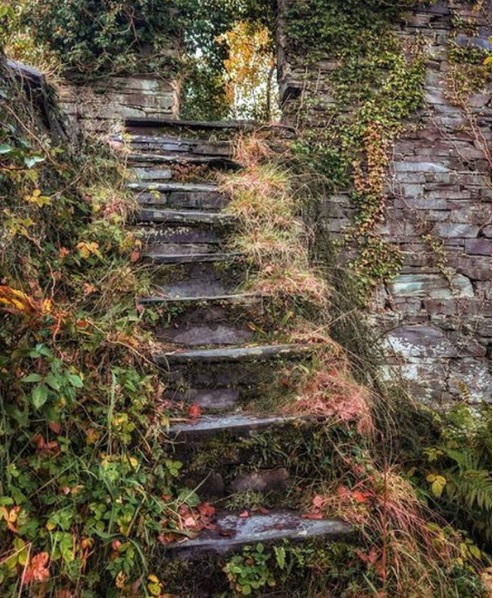 Slate steps in the village still in good order (Image: Tony Harnett)
Subsequently, the river underwent redirection and deepening to control the flow, and while it addressed the immediate issues, it generated complications further downstream. To tackle the challenge, a Cornish beam engine was built on site to replace the waterwheels, and it continues to stand to this day. This represents one of the abandoned village's most remarkable features - an enormous structure with its original machinery still preserved.
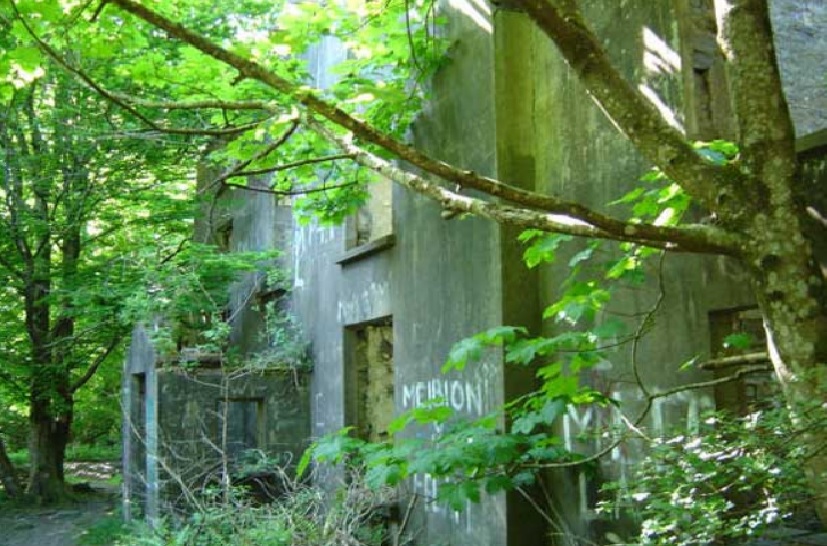
Another centrepiece of the former village is its 18th-century hall, left undisturbed since 1946, which now exists as an ivy-clad building, extensively covered with graffiti and deteriorating brickwork. The deserted village as a whole has become a major attraction for keen explorers and walkers looking to discover its hidden mysteries and photograph the haunting, overgrown structures. Now the location lies within the UNESCO Slate Landscape of Northwest Wales and is maintained as a fragment of history, preserved in time.
Dorothea Quarry
Across the North West corner of Wales lies a long belt of Cambrian slate formed about 500 million years ago. This stretches from the Nant Ffrancon valley in the East to the Nantlle valley in the West. Along this belt were situated some of the largest and most productive slate quarries in the world. In the east the slate was won by open quarries using the gallery method, while at the west end, the slate beds were found beneath the floor of the valley. It was the depth of the slate beneath the valley floor which influenced the quarrying techniques of Nantlle. The only way to obtain the rock was by digging down and creating large pits. These can be found in many locations in the Nantlle valley. Some of the difficulties of pit working included the need to pump out any water 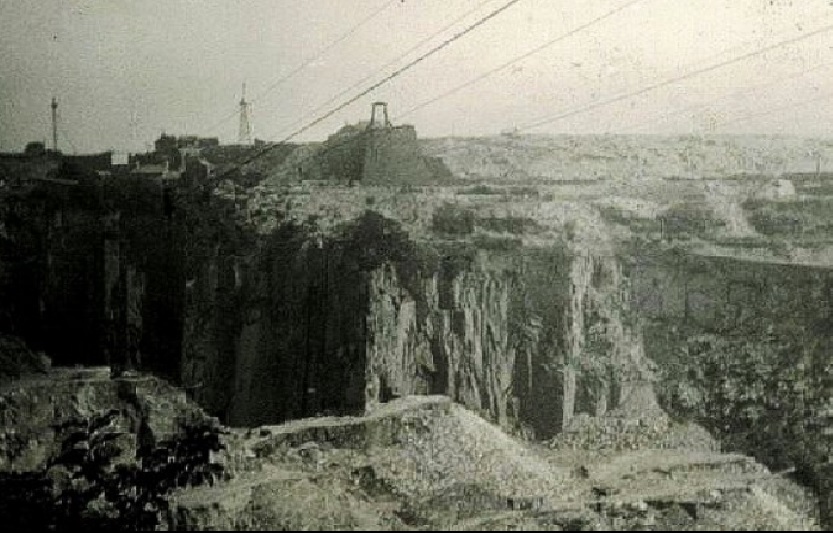 entering the workings and the need to haul out waste as well as good rock. Both of these imperatives increased costs, added to which was the Nantlle area's greater distance from the markets. Nantlle slate was always at a disadvantage compared to the more easily won rock at Penrhyn and Dinorwic further east and was always the first to suffer from any downturn or recession.
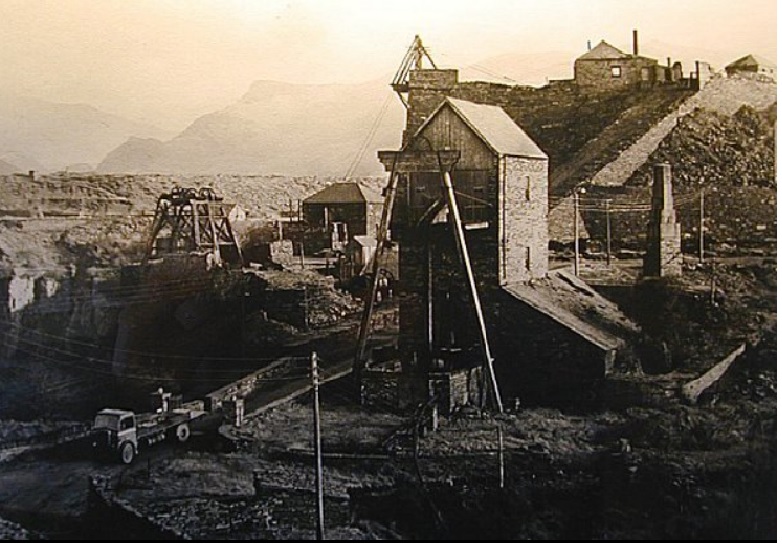
Quarry pre 1940 looking east. The wires and towers are for the aerial ropeways or "Blondins".Click for larger pic
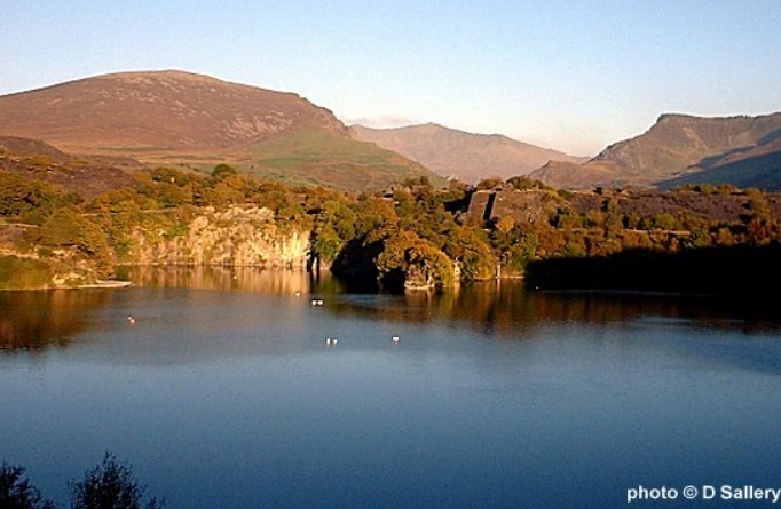 The same view today.
Other difficulties were faced by the Nantlle industry. There were a large number of very small quarries, a situation brought about by numerous landowners. These small quarries had little capital to invest and no way to expand. Although there were amalgamations and takeovers which created large units like Dorothea, the tradition of the small quarry survived and can be seen today in the long line of small workings along the south side of the valley. Another major problem was disposal of waste rock. After the time and trouble of bringing it up to surface level, it then had to be hauled up again onto the raised waste tips, so typical of the valley. This of course meant that any winnable slate under the waste tips was destined to remain there. If history had been different and the whole valley had been operated as a single undertaking, then the prospects for Nantlle slate could have been transformed.
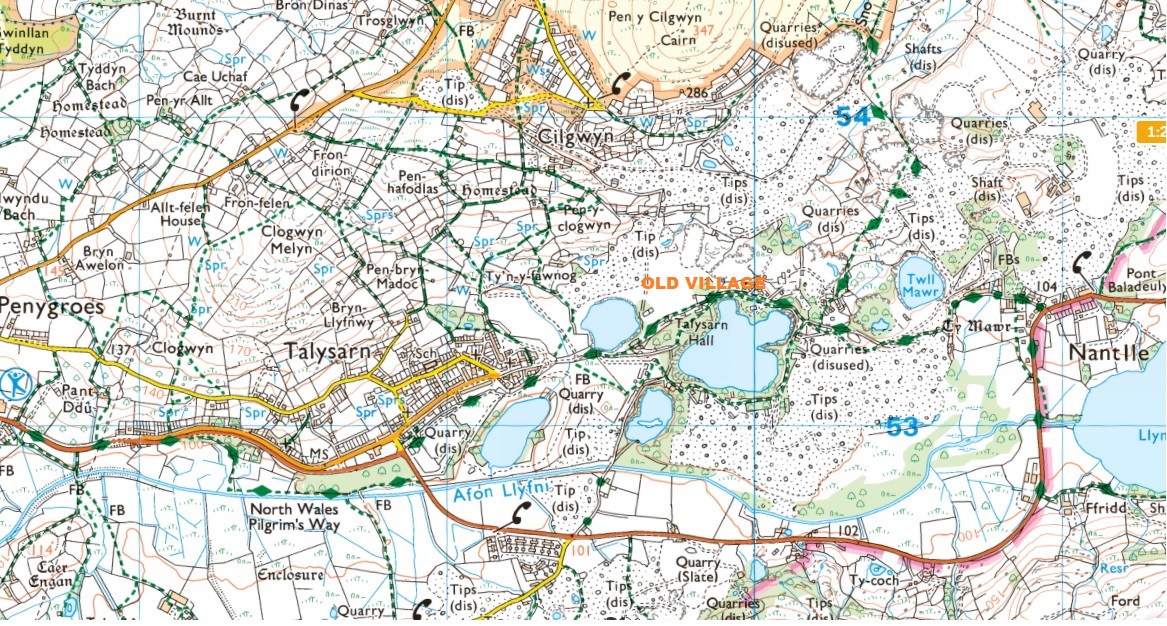 Map of area.Click for larger pic
The oldest quarry in the Nantlle district was Cilgwyn quarry, this is situated to the north of Dorothea on the hillside and is now a landfill site. It is thought to have been first worked in the fourteenth century and it is believed that some of Edward the 1st's Welsh castles were roofed with Cilgwyn slate.
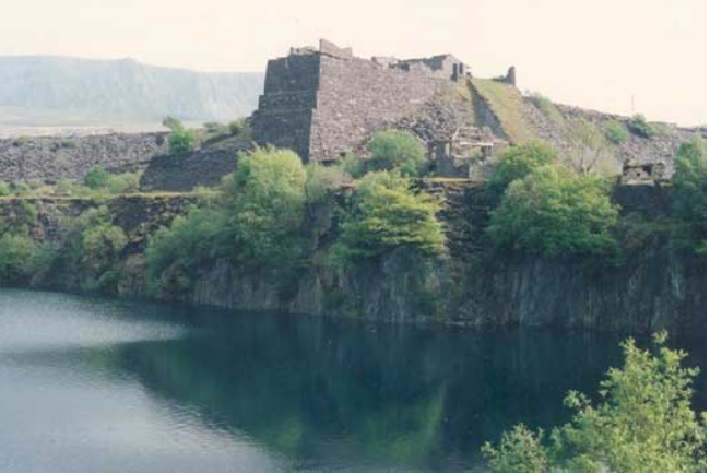
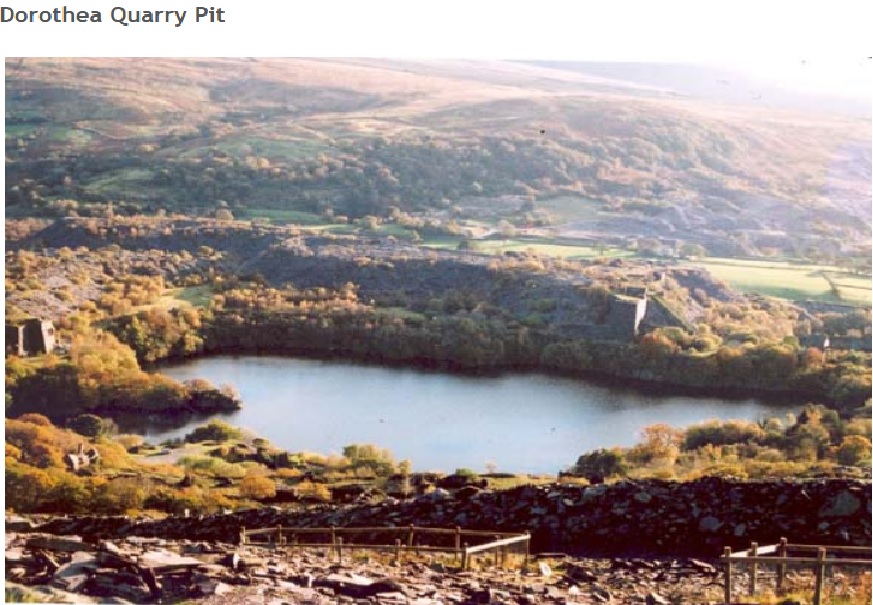
Dorothea itself opened in 1820 and remained in production until 1970. The land the quarry stands on was owned by a Richard Garnons (1774 -1841) but the main driving force for quarrying in the valley was a Lancastrian - William Turner (1776 -1857). The original name for the quarry was Cloddfa Turner but it was renamed Dorothea after Gamona's wife. 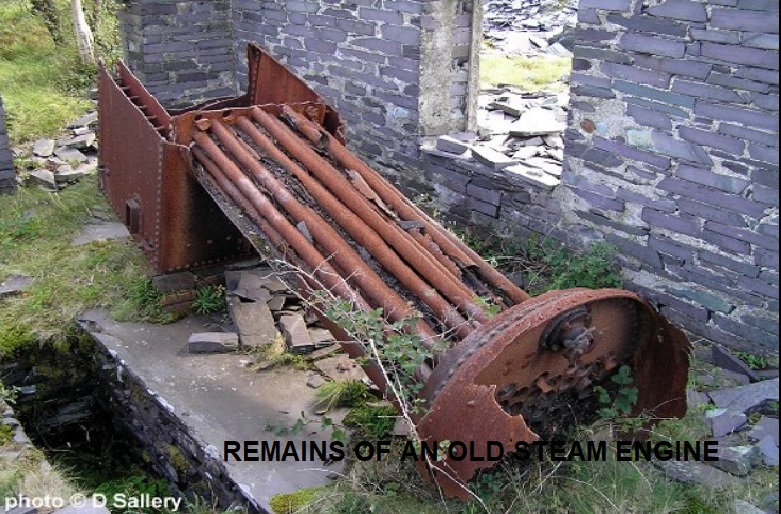 The workings grew out of a series of smaller workings with names such as Hen Dwll, Twll Bach, Twll y Weirglodd, Twll Coch and Twll Fire. Over the years these pits were deepened and amalgamated into the large flooded pit seen today. Turner gave up his interest in the quarry in 1848 and following a brief period of closure it was acquired by a family called Williams. John Hughes Williams was from Llangernyw near Denbigh.He married into the Rev John Jones of Talysarn's family & bought shares in the Company set up by Jones& local Nantlle quarrymen (click for bigger pic) (though half the money was raised outside the area). Williams gradually bought out most of the others by the 1860s, and his family continued in charge thereafter.
In 1828 the Nantlle Railway opened giving the quarries of the valley a route to the sea. The horse powered railway was of 3' 6" (105cm) gauge and ran originally to Caernarfon. From 1872 the tramway ran only as far as Talysarn where connection was made with the national rail network. The Nantlle Railway continued in use, as a part of British Railways, until 1963 and remained horse worked until a couple of years before closure. 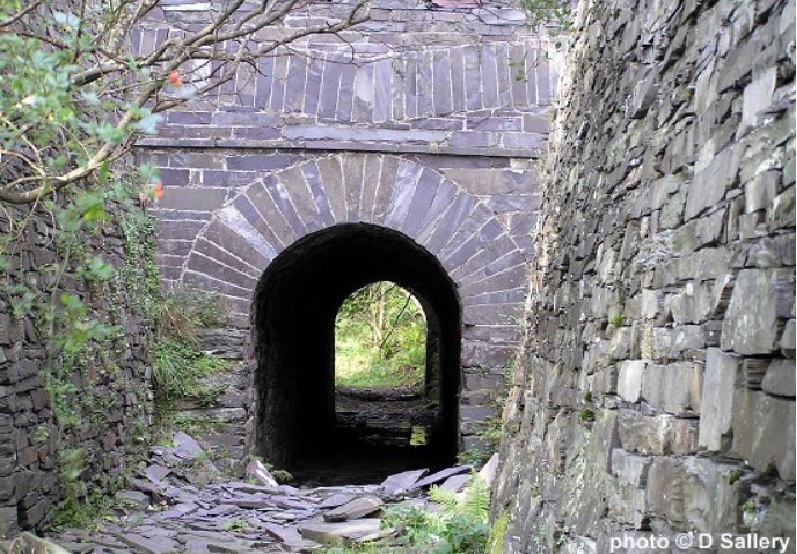 The final two horses in use were "Prince" and "Corwen". After the horses were retired a tractor was used for the diminishing amount of traffic. Over its lifetime the route of the railway was moved many times as the quarries expanded. Much of its route is traceable today as far as the easterly terminus at Penyrorsedd Quarry. Dorothea Quarry used Nantlle Railway to dispatch slate from 1829 to 1959.
(click for bigger pic)
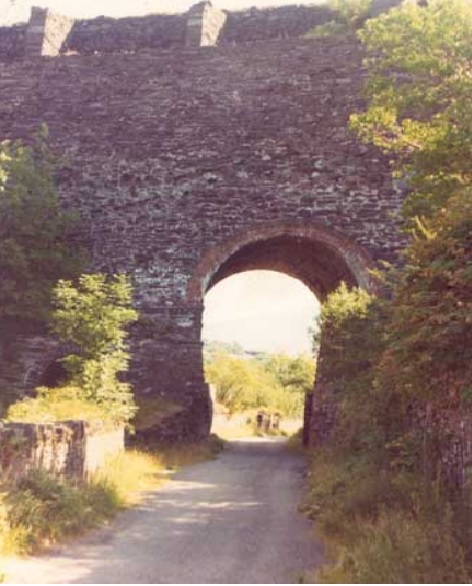
This tramway tunnel passes under one of the pyramids and once lead onto the Nantlle Railway.
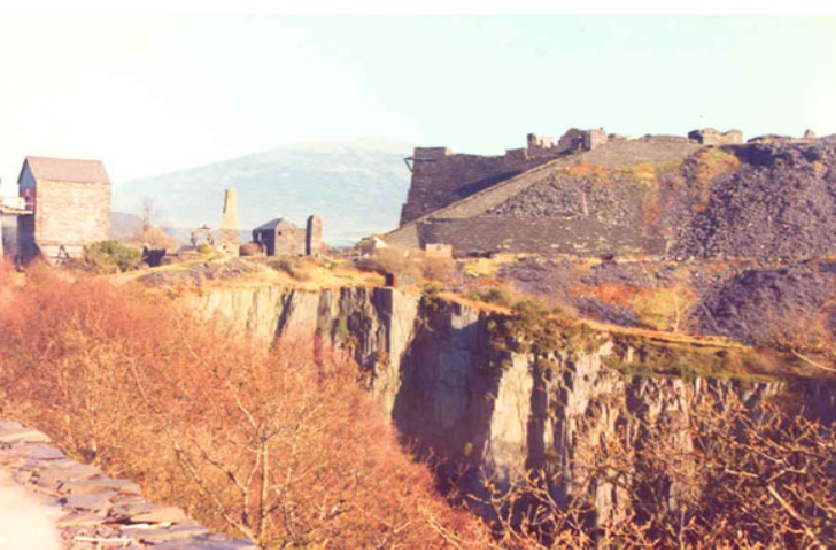
There are two of these large structures, known as pyramids, at Dorothea, they served as bases for the chain inclines and allowed the waste rock to be tipped behind. By the 1840's production at Dorothea had built up to about 5,000 tonnes per annum and had reached over 17,000 tonnes by the 1870's. The future looked good for Dorothea but serious flooding problems then befell the quarry. 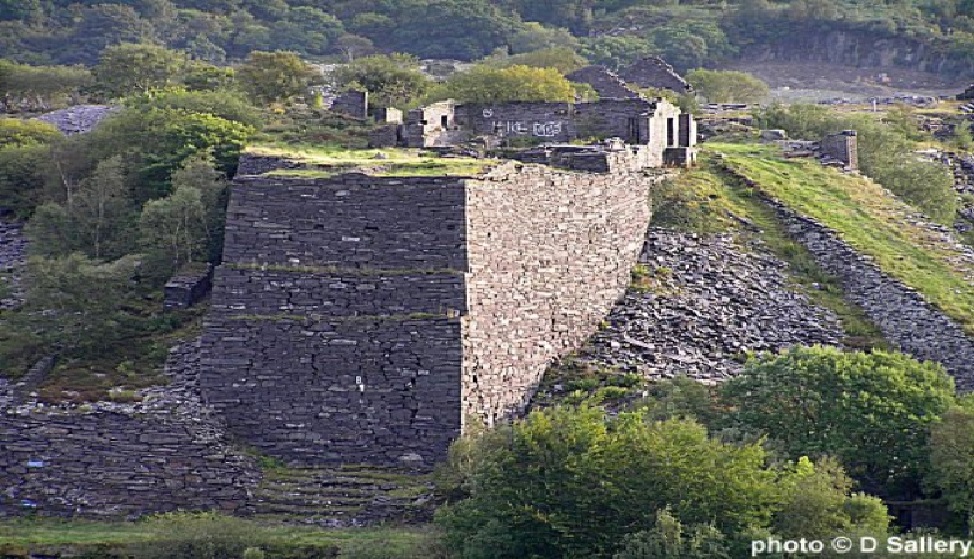 In 1884 several men were drowned when the pit was engulfed. In 1895 the Afon Llyfni which flowed through the valley was realigned and deepened to flow to the south of the slate workings. This cured the flooding problems to some extent but as the workings deepened, the need to continually pump out water became a constant drain on the quarry's profits. In 1904 the decision was taken to install a Cornish Beam Engine on site to replace the waterwheels. (more details of the beam engine and engine house later.) -----------------------------(click for bigger pic)
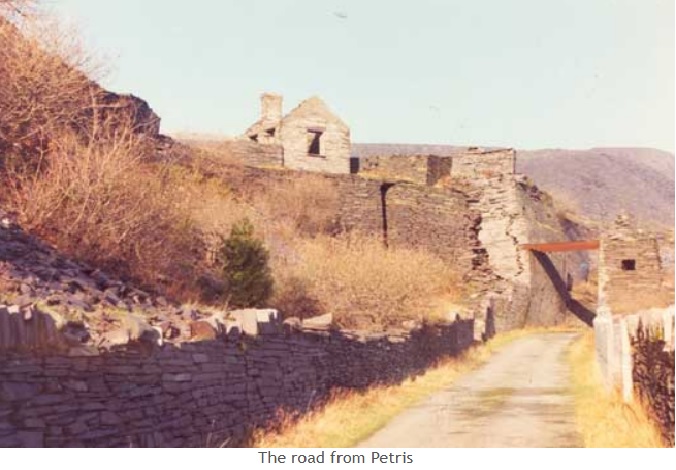
 As the quarries of the valley continued to grow it led to the removal of the village of Talysarn which was relocated to the west. Some of the old village buildings remained in use by the quarries and their ruins can still be seen today. This was followed in 1927 by the relocation of the main road to the south of the valley. The route of the old road can still be followed. To lift the slate out of the pit, wire inclines were installed in the 1840's. There were ultimately eight of these and they were complimented after 1900 by (Click for bigger pictures)aerial ropeways or Blondins.
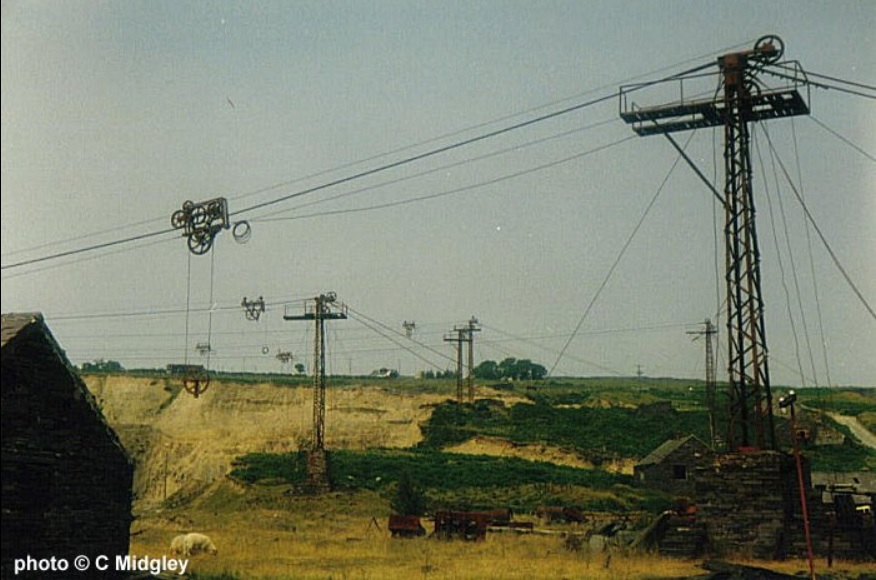 At first steam powered, the Blondins were electrically worked from 1959. They remained in use until 1965 when a road was built to the bottom of the pit. The last of the wire inclines went out of use in 1957. Other powered inclines were used at the quarry to lift the waste rock up to the elevated rubbish tips.
Aerial ropeways or "Blondins" were used to raise the slate from the pits. These five disused examples were photographed at Penyrorsedd quarry in 1992. Today only one is left standing.
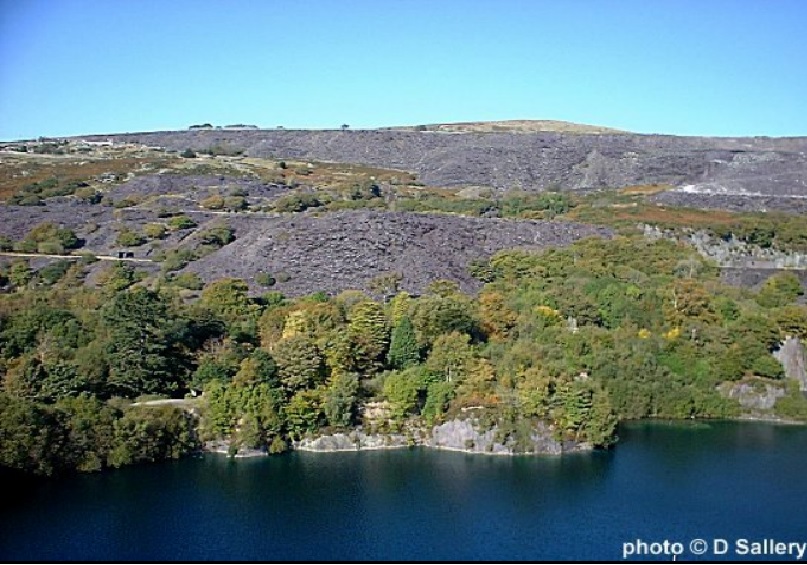 Dorothea quarry pool in the foreground with the Cilgwyn quarry tips behind.
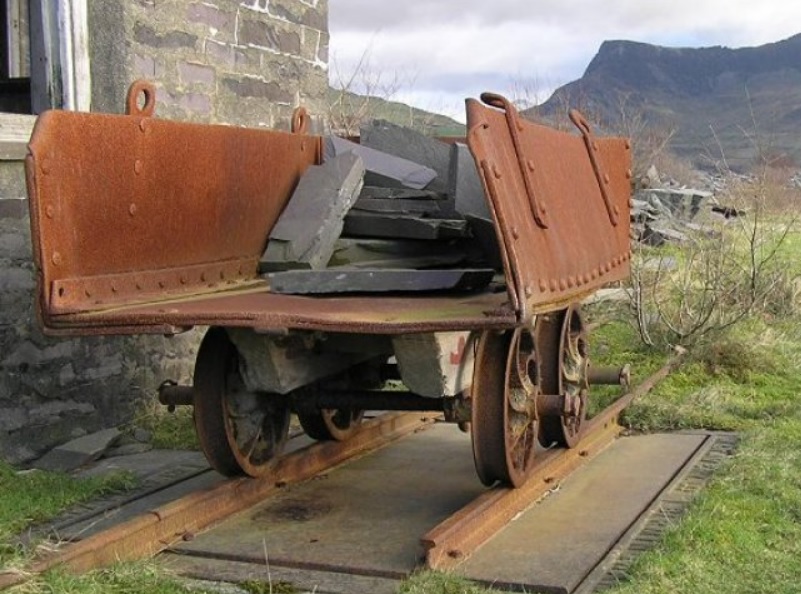
There was an extensive rail network on site at ground level and on the waste tips. The track gauge of the internal quarry railways was 2' (60cm) as opposed to the "main line" gauge of the Nantlle Railway of 3' 6" (105cm). There are records of 5 steam and 4 petrol driven locos being used at various times and horses were also used. Use of the 2' gauge quarry rail network had ceased by 1968.
 Dorothea's closure came about due to the national decline in the industry, the slate industry had reached a peak in the 1890's but from then on it was a story of contraction. Dorothea was no exception as tonnages declined and manning was cut - a cycle of decline set in. Other large quarries in Dyffryn Nantlle also closed - Pen y Bryn in 1950 and Cilgwyn (now a landfill site) in 1956. Today the only significant quarry still in production in the valley is Penyrorsedd, now owned by the Welsh Slate group, and busily exploiting a newly found seam of green rock.
Quarry Pictures
The Cornish Beam Engine
At the beginning of the 20th Century, Dorothea quarry was urgently in need of a long term solution to the ongoing problem of keeping the workings, by then over 500 feet deep, free of water. It was decided to purchase a Cornish beam engine. An old but reliable technology. The engine was built by Holman Brothers and was the last but two ever built. It is also believed to be the newest Cornish beam engine still in existence. The engine was able to pump 10 gallons of water per second from a depth of over 500 feet. The engine started work in 1906 and served until 1951 when it was replaced by a 60hp electric pump. Apart from a brief period in 1956 the engine has been disused ever since.
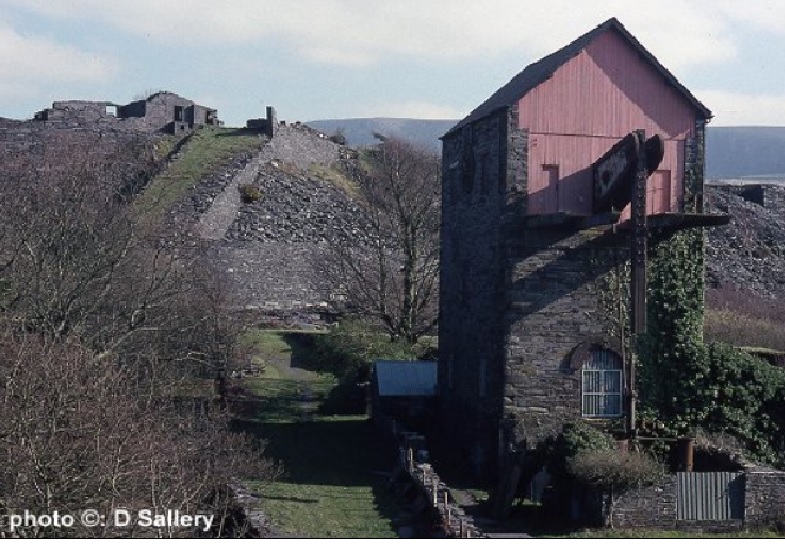
 The Enginehouse is a Grade 1 listed structure
Click for Bigger Pictures
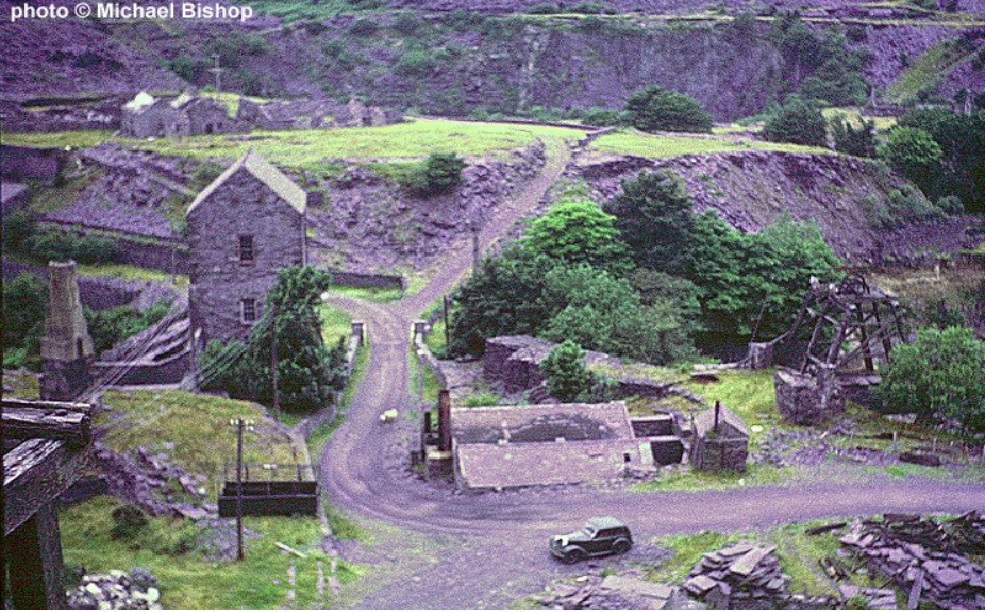
Following closure of the quarry in 1969, the site has been owned by several companies, each with its own priorities and plans - none of which have included the engine. This has made the restoration and maintenance of this important artifact extremely difficult. In fact, grants have been made available towards its restoration but have subsequently been withdrawn because of the problems of access.
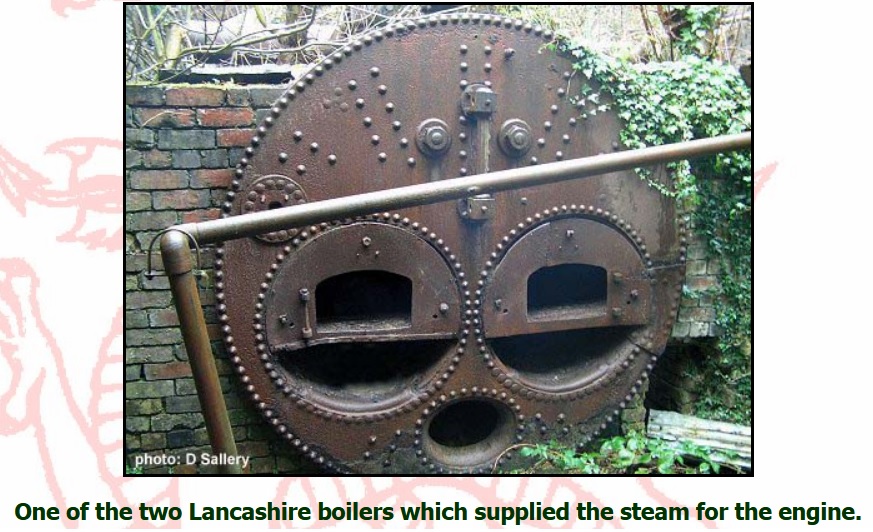
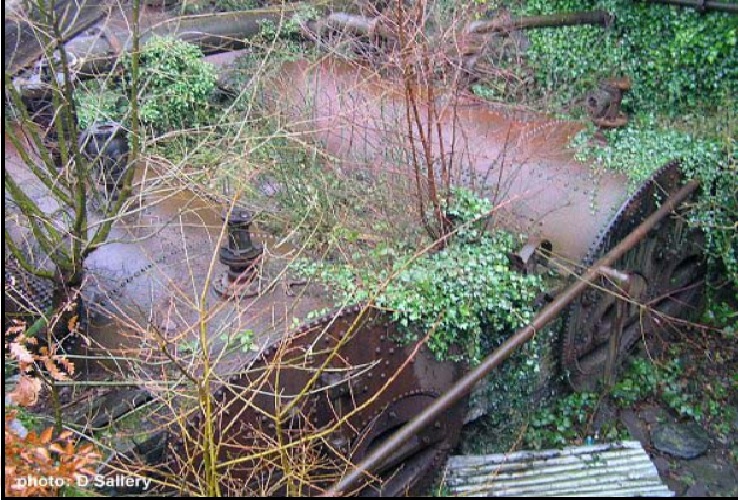 View from above of part of the two massive boilers, much of the piping is still intact although the boiler house roof has been removed.
The enginehouse is a Grade 1 listed structure which is the same as Caernarfon Castle. Despite this, and despite the valiant efforts of the engine's custodian, it continues in a state of limbo. What should be one of North Wales finest examples of industrial heritage is now a forgotten link to a golden age.
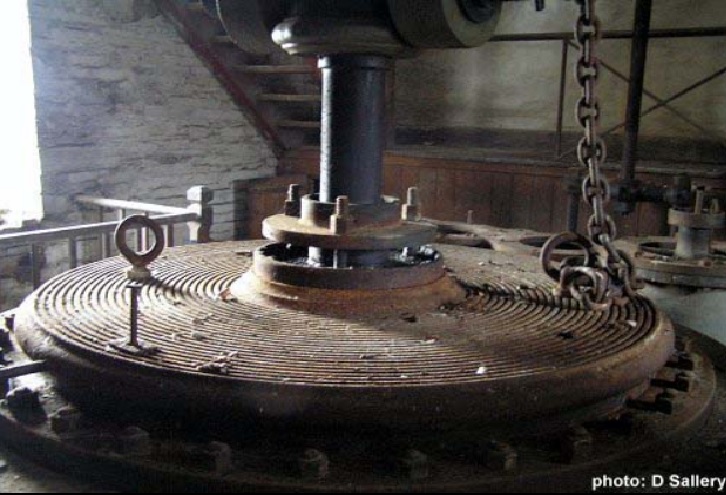 The huge 68" diameter single cylinder.
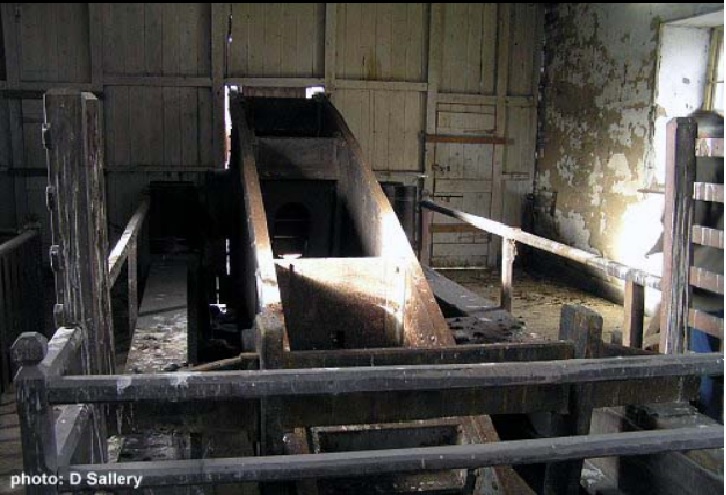 The main beam is a steel casting and weighs over 23 tons. Half the beam is seen here - the rest is outside beyond the wooden wall. The bearings on which the beam pivots are next to the wall.
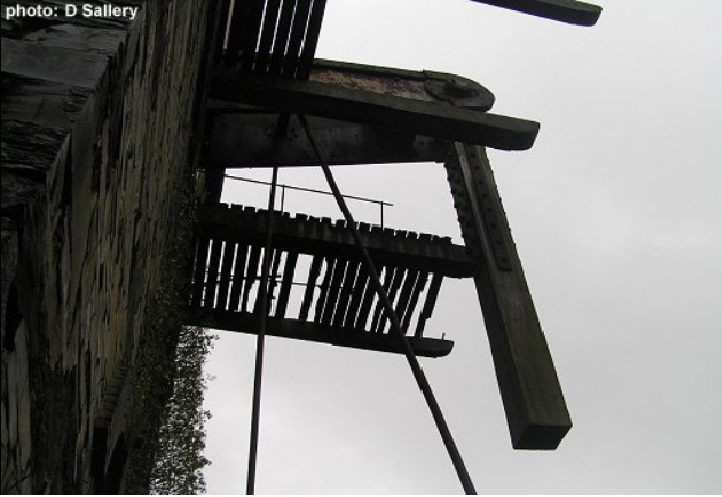 The engine pumped water from a shaft 155 yards deep, this a view of what remains of the pumping rod. It is attached to the end of the beam. As the beam rotated back and forth, it activated the pump.
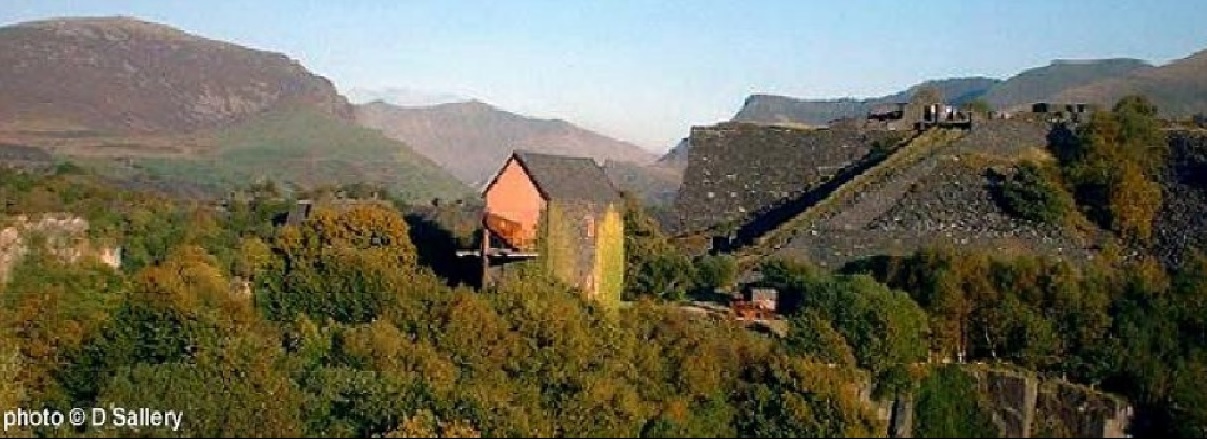
The flooded Dorothea Quarry, now over 100 meters deep, forms a striking feature of the landscape and is part of the UNESCO-designated Slate Landscape of Northwest Wales World Heritage Site since 2021.
Talysarn, a former slate quarrying village in northwest Wales, was abandoned in the early 20th century and is now largely reclaimed by nature, with moss-covered ruins and industrial remnants still visible.
Talysarn originated in the late 18th century near Pen-y-Bont on the site of Coedmadog Farm and expanded significantly between 1850 and 1870 due to the booming Cloddfa Coed Slate Quarry. The village developed along the Hen Lôn turnpike road and the Nantlle Railway to house quarry workers and their families, becoming a central hub in the Nantlle Valley’s slate industry.The Dorothea Quarry, opened in 1820, became one of the largest slate operations globally, producing roofing materials that “roofed the 19th-century world”
Today, the abandoned site is overgrown with vegetation, moss, and vines, creating a hauntingly beautiful landscape described as a “Welsh Angkor Wat” Visitors can still see remnants of Plas Talysarn, the chapel, boiler houses with deteriorated Lancashire boilers, stables, kennels, and traces of the old Nantlle horse tramway. Talysarn’s ruins reflect the village’s industrial past, the slate industry’s global impact, and the human stories of displacement and adaptation. The site preserves evidence of 19th- and 20th-century quarrying techniques, including open-pit excavations and steam-powered machinery, while also showcasing natural reclamation processes in a temperate, wet climate. The village remains culturally significant, retaining its Welsh heritage and historical identity despite relocation
Some links : The V2 table incline at Vivian Quarry is impressive and worth a look
The V2 table incline, Vivian Quarry, Dinorwic V2, was originally restored in 1998 and was fully refurbished in 2012. Nowadays it is powered by an electric motor. It is the last incline of its type in use out of the hundreds which once existed in the slate industry.
The V2 table incline, Vivian Quarry, Dinorwic
Underwater at Dorothea Quarry!
Lernion locomotive shed and level
Cnicht is one of the icons of Wales and is popularly known as the Welsh Matterhorn because of its shape when viewed from Porthmadog and the Glaslyn estuary.
Cnicht slate workings
TOP
Home Page
Welcome Page
doobydoo@pastechoes.co.uk ©

 At first steam powered, the Blondins were electrically worked from 1959. They remained in use until 1965 when a road was built to the bottom of the pit. The last of the wire inclines went out of use in 1957. Other powered inclines were used at the quarry to lift the waste rock up to the elevated rubbish tips.